
Probiotics can help reduce nausea and vomiting during cancer treatment
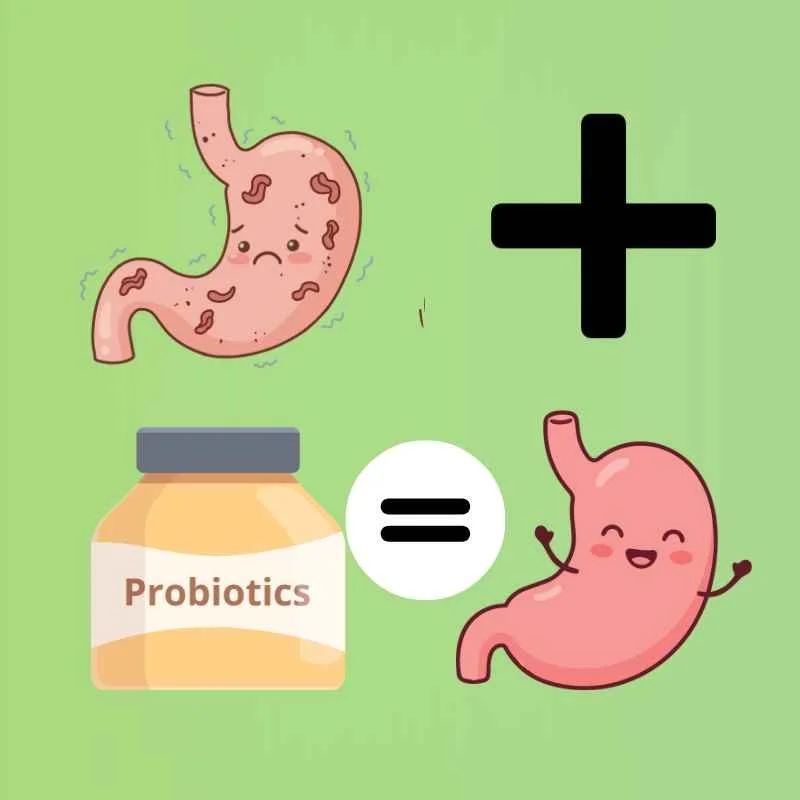
When you think of cancer treatment, I’m betting that the side effects that come to mind first are nausea and vomiting. They really affect your quality of life.
Effects of nausea and vomiting on your health
You don’t enjoy your food, so you run the risk of not getting enough nutrients. This could reduce your immunity.
The acid from vomiting corrodes your teeth.
If nausea and vomiting are extreme, they can cause doctors to stop or delay treatment.
Your electrolytes can get unbalanced, with potentially fatal effects.
And the constant feeling of nausea sticks around too, sometimes for months after treatment finishes.
There are some drugs that can be helpful, but they rarely stop it completely.
What causes nausea and vomiting?
The reason that you get nausea is that cancer treatments kill the fast-growing cells in the body. The body’s reaction to dead cells is to expel them from the body. But they also alter the gut microbiome, the bacteria in your gut, and an increase in ‘bad’ bacteria can cause a body-wide inflammatory effect.
If we increase the ‘good’ bacteria and reduce the ‘bad’ ones, that inflammation can be reversed. Enter probiotics, which research shows are effective at reducing nausea and vomiting.
The research on probiotics during cancer treatment
In a group of 60 children with acute leukaemia, half received a daily dose of Lactobacillus rhamnosus, a common probiotic, twice a day for the first 5-7 days of their chemotherapy until their white blood count dropped. The group receiving the probiotics was half as likely as the others to experience nausea and 60% less likely to vomit (1).
Researchers in a controlled trial divided 41 lung cancer patients into two groups. Twenty of them took Clostridium butyricum, a probiotic known to reduce diarrhoea in digestive diseases, 3 times daily for 3 weeks. After 3 weeks, the probiotic group had less severe nausea and vomiting than the placebo group. They also had significantly less diarrhoea and a higher ratio of ‘good’ bacteria to ‘bad’ (2).
A review of 20 random controlled trials found that strains of L. acidophilus, L. casei, Bifidobacterium longum, and L. rhamnosus were effective against gastrointestinal side effects of treatment, when used for at least 4 weeks either singly or in combination (3).
Of 140 colorectal cancer patients, half received a mixture of particular strains of Lactobacillus and Bifidus daily for 4 weeks, plus 2 grams of omega-3 fatty acids daily for 8 weeks during their chemotherapy treatment. Researchers gave the others a placebo. They measured them at the beginning of treatment, after 8 weeks, and after 6 months. Their scores for nausea and vomiting after 8 weeks and 6 months were about 12 times less severe than the placebo group. Their overall physical and mental health was also much better than that of the placebo group. They had significantly less pain, insomnia, appetite loss, and diarrhoea too (4).
Conclusion
Probiotics are an excellent weapon to add to your arsenal against nausea and vomiting. Don’t forget to add plenty of fibre to your diet, because this feeds the probiotics.
Besides fighting nausea and vomiting, probiotics have a wealth of other benefits. They can help heal the gut after treatment, and help reduce fatigue. They can also play a part in helping prevent weight loss (cachexia) during treatment.
If you have enjoyed this article, you can sign up for my Treatment Support newsletter to get an article sent to you each month. As a thank you gift, I’ll send you a free booklet on soothing side effects. Learn more here.
If you’re more interested in articles about cancer prevention, I have another newsletter that goes out each month covering that. The thank you gift for that is a collection of recipes aimed at cancer patients. Click this link to find out more.
If you would prefer a complete guide, you can find out all about the other factors that can help current cancer patients and those who’ve finished their treatment to regain their health in my book, Naturally Supporting Cancer Treatment. Learn more here.
References
Reyna-Figueroa J, Barrón-Calvillo E, García-Parra C et al. Probiotic Supplementation Decreases Chemotherapy-induced Gastrointestinal Side Effects in Patients With Acute Leukemia. J Pediatr Hematol Oncol. 2019;41(6):468-472. doi:10.1097/mph.0000000000001497
Tian Y, Li M, Song W, Jiang R, Li Y. Effects of probiotics on chemotherapy in patients with lung cancer. Oncol Lett. 2019;17:2836-2848. doi:10.3892/ol.2019.9906
Rodriguez-Arrastia M, Martinez-Ortigosa A, Rueda-Ruzafa L, Ayora A, Ropero-Padilla C. Probiotic Supplements on Oncology Patients’ Treatment-Related Side Effects: A Systematic Review of Randomized Controlled Trials. Int J Environ Res Public Health. 2021;18(8):4265. doi:10.3390/ijerph18084265
Golkhalkhali B, Rajandram R, Paliany A et al. Strain-specific probiotic (microbial cell preparation) and omega-3 fatty acid in modulating quality of life and inflammatory markers in colorectal cancer patients: a randomized controlled trial. Asia Pac J Clin Oncol. 2017;14(3):179-191. doi:10.1111/ajco.12758