Coenzyme Q10 and Cancer: What Patients Should Know
If you are going through cancer treatment, you have probably heard plenty about supplements. Coenzyme Q10 (CoQ10) is one that comes up regularly, and there is a good reason for the interest.
CoQ10 is a substance your body makes naturally. It has an important role in producing energy inside your cells and also acts as an antioxidant. Because cancer treatment can place considerable demands on the body, researchers have been looking at whether CoQ10 might help with problems such as fatigue and treatment-related oxidative stress, and whether it may have a role in protecting the heart during some chemotherapy treatments.
But there is an important distinction to make from the outset: CoQ10 is not a cancer treatment. The most useful evidence so far concerns its potential as a supportive therapy, particularly for some treatment side effects. The research is interesting, but it is not yet strong enough to say that CoQ10 improves cancer survival or that everyone with cancer should use it.
So, what does the research actually tell us?
What is CoQ10 and Why Might It Matter During Cancer Treatment?
CoQ10 is a fat-soluble compound that virtually every cell in the body contains. Organs with high energy demands, including the heart, liver, and kidneys, contain high concentrations of it.
One of its most important jobs takes place in the mitochondria, the structures inside our cells that convert nutrients into usable energy. CoQ10 helps the electron transport chain function and, ultimately, helps cells produce ATP, the energy currency that powers cellular processes (1).
CoQ10 also has antioxidant activity (1). It helps protect cell membranes and other cellular components from oxidative damage.
Our natural production of CoQ10 declines as we age. During some cancer treatments, particularly with anthracycline chemotherapy such as doxorubicin, levels of CoQ10 drop (2). This has prompted interest in whether replacing CoQ10 might help support patients during treatment.
CoQ10 and Treatment-Related Fatigue
Cancer-related fatigue is quite different from simply feeling tired after a busy day. It can be persistent and may make ordinary activities surprisingly difficult. Several factors can contribute to it, including the cancer itself, chemotherapy, radiation, poor sleep, nutritional problems, anaemia and the physical and emotional strain of treatment.
Because mitochondria are central to energy production, researchers have been investigating CoQ10 as one way of supporting cellular energy.
A recent meta-analysis concluded that CoQ10 supplementation may reduce fatigue in some cancer patients (3). Some trials have reported improvements in fatigue scores and self-reported energy. However, some individual trials have not had the same results (4). We should interpret these results cautiously. Studies differed in their design, doses, and patient populations, and we still need larger, better-designed trials to confirm its use for fatigue in cancer patients.
This is also a good example of why I wouldn't look at CoQ10 in isolation. If fatigue is troubling you, it makes sense to look at the complete picture, including sleep, nutrition, physical activity where appropriate, anaemia and other treatment-related causes, rather than simply adding a supplement.
Could CoQ10 Protect the Heart During Chemotherapy?
This is one of the more interesting areas of CoQ10 research.
Some chemotherapy drugs, particularly the anthracyclines doxorubicin and epirubicin, can damage heart muscle. Doctors refer to this as cardiotoxicity, and cumulative exposure can raise the risk.
Heart muscle cells have a very high demand for energy, so it is biologically plausible that a substance involved in mitochondrial energy production could be helpful. CoQ10's antioxidant activity may also be relevant because oxidative stress is one mechanism implicated in anthracycline-related heart damage.
In a randomised controlled trial in which patients receiving anthracycline-based chemotherapy who took CoQ10 had better cardiac-function markers than those receiving placebo (5).
That is encouraging, but never regard CoQ10 as a substitute for the cardiac monitoring recommended during potentially cardiotoxic treatment. If you are receiving an anthracycline, discuss any supplement with your oncology team before taking it.
CoQ10, Antioxidants and Cancer Treatment
The antioxidant question deserves particular attention.
Chemotherapy and radiation can generate oxidative stress, which contributes to damage to cancer cells. But oxidative stress can equally damage healthy tissue. This creates a genuine question about whether taking antioxidant supplements during treatment could interfere with therapies that depend, at least partly, on oxidative mechanisms.
The evidence does not present a clear picture, and we must not simplify it to the belief that all antioxidants are either beneficial or damaging.
The research shows that CoQ10 at typical supplemental doses does not reduce treatment effectiveness (5). Some research suggests it may help treatment tolerance (5). However, remember that different cancer treatments work in different ways.
For that reason, I would not recommend starting CoQ10 during active treatment without discussing it with your oncologist. Your treatment protocol matters, as does the dose and timing of any supplement taken alongside that treatment.
What Does the Research Say About CoQ10 and Cancer Itself?
In cell and animal studies, CoQ10 has been associated with effects such as reduced cancer-cell proliferation, increased apoptosis and reduced tumour growth in some models (6, 7, 8).
It is tempting to jump from these findings to the conclusion that CoQ10 can treat cancer. But laboratory findings are not the same thing as evidence of benefit in people.
In human studies, the more consistent area of interest has been supportive care, particularly fatigue, quality of life and markers of cardiac function, rather than treating the cancer itself.
There is also research suggesting that lower CoQ10 levels may be associated with poorer outcomes in some cancers, including breast cancer (9, 10, 11). An association, however, does not prove that taking CoQ10 will improve survival.
This distinction matters. Some people might benefit from CoQ10 as a supportive nutrient, but no one should present it as a cancer treatment.
Can You Get CoQ10 From Food?
Yes. CoQ10 occurs naturally in a number of foods.
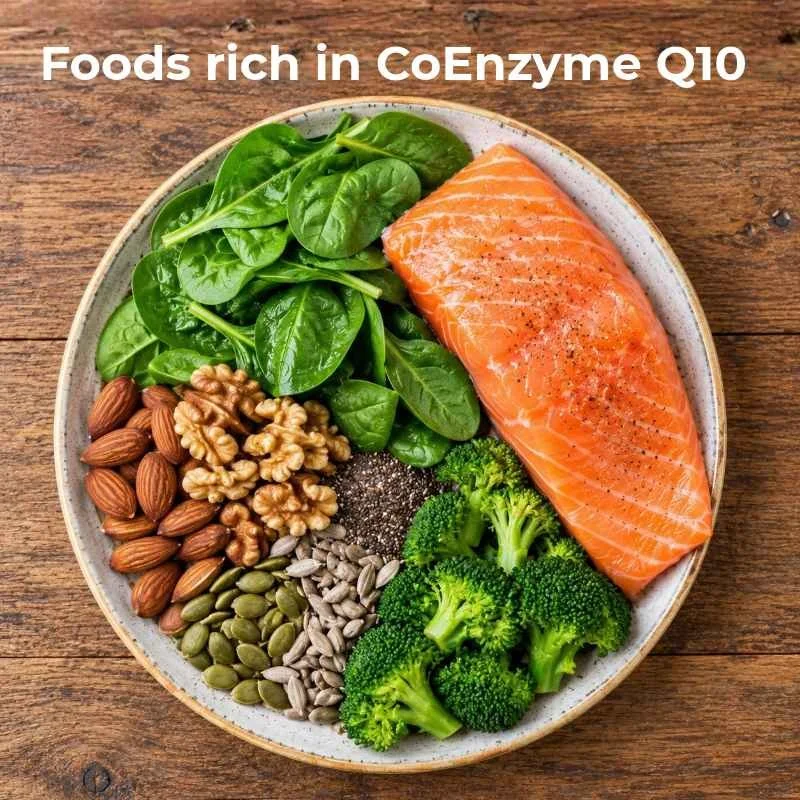
The richest dietary sources include organ meats such as heart, liver and kidney. Oily fish such as sardines, mackerel, tuna and salmon also provide CoQ10. You can find smaller amounts in foods such as nuts and seeds, spinach, broccoli and cauliflower.
For many people, oily fish and nuts are more realistic everyday choices than organ meats, although you can buy powdered liver, which you could sprinkle on meat dishes or add to smoothies. However, nausea, taste changes, poor appetite, digestive symptoms or dietary restrictions can complicate food choices during cancer treatment.
There is another practical point: the amounts obtained from food are considerably lower than the doses used in many supplement studies. So while a CoQ10-rich diet is worthwhile, it may not provide the amounts used in clinical research.
Rather than trying to obtain a particular therapeutic dose from food, I would focus on making your overall diet nourishing and manageable during treatment.
Should You Take a CoQ10 Supplement?
Whether supplementation makes sense depends very much on the individual and the treatment they are receiving.
CoQ10 supplements are available in two principal forms: ubiquinone and ubiquinol. Ubiquinone is the oxidised form, while ubiquinol is the reduced form. Some comparative research suggests that ubiquinol can produce higher blood levels of CoQ10 than ubiquinone, particularly in some older adults and people with digestive difficulties (12).
That does not necessarily mean that everyone needs ubiquinol, but it is a factor worth considering when choosing a product.
Studies have used a fairly wide range of doses, from around 100 mg to 600 mg per day, depending on the purpose of supplementation. Studies investigating fatigue have often used 100–300 mg daily.
Since CoQ10 can give you a boost of energy, I recommend taking it in the morning, preferably with a meal with fat in it. That could be toast and butter or eggs.
Safety and Possible Interactions
CoQ10 is generally well tolerated. At higher doses, some people experience digestive symptoms, such as nausea or loose stools. Taking it with a meal containing fat can improve absorption and may also improve tolerance.
There are, however, reasons not to treat CoQ10 as automatically risk-free simply because it is a naturally occurring substance.
CoQ10 can interact with anticoagulant medications such as warfarin. There are also theoretical concerns about interactions with some chemotherapy drugs, although the clinical evidence is not conclusive.
If you are receiving chemotherapy, radiation, immunotherapy, targeted therapy or other cancer medicines, tell your oncology team about every supplement you are taking or considering.
The same applies if you take prescription medicine for other conditions. Your doctor or pharmacist can check for potential interactions with your particular treatment.
Who Might Consider CoQ10?
The research does not justify saying that every person with cancer should take CoQ10. However, there are some situations in which discussing it with your healthcare team may be relevant.
These include:
People experiencing significant treatment-related fatigue, particularly you’ve addressed other contributing factors.
People receiving anthracycline chemotherapy because of the potential concern about cardiac toxicity.
Older adults, whose natural production of CoQ10 is lower than it is earlier in life.
People whose treatment or health circumstances may place additional demands on energy metabolism or increase oxidative stress.
Even in these situations, potential benefits need to be weighed against the person's treatment plan, medications and overall health.
Putting CoQ10 Into a Bigger Picture
One thing when looking at supplements during cancer treatment is to avoid searching for a single cure-all.
CoQ10 is only one piece of the puzzle. Nutrition, sleep, appropriate physical activity, stress management, and maintaining muscle mass all matter too. So does dealing with problems such as nausea, digestive symptoms, poor appetite, pain and fatigue rather than simply trying to cover them up with supplements.
If treatment has affected your digestive system, that is another consideration. You should be able to absorb the nutrients you are taking, and digestive problems can make this more difficult.
The best supportive-care plan is therefore an individual one. What makes sense for someone receiving doxorubicin may be quite different from what makes sense for someone receiving another treatment. Your cancer type, treatment protocol, medications, age, nutritional status and side effects all matter.
And remember: supportive care should support your cancer treatment, not compete with it.
Frequently Asked Questions
What is CoQ10?
CoQ10 is a naturally occurring, fat-soluble compound found throughout the body. It has an important role in mitochondrial energy production and also has antioxidant activity.
Can CoQ10 help chemotherapy-related fatigue?
Research suggests that CoQ10 may reduce fatigue in some cancer patients, although the evidence is still developing and larger, more rigorous studies are needed. Fatigue has many possible causes, so do not use CoQ10 as the only approach.
Is CoQ10 safe during cancer treatment?
CoQ10 is generally well tolerated, but that does not mean it is appropriate for everyone during cancer treatment. Possible medication interactions and questions about antioxidant supplementation make it important to discuss CoQ10 with your oncology team before starting it.
What is the difference between ubiquinone and ubiquinol?
Ubiquinone and ubiquinol are two forms of CoQ10. Some research suggests that ubiquinol is more readily absorbed in certain groups, including some older adults. The choice of form should consider the individual and the product being used.
How much CoQ10 should I take?
Studies have used doses ranging from approximately 100 mg to 600 mg a day, depending on the purpose. Fatigue studies have often used 100–300 mg daily. These study doses should not be treated as a universal recommendation. Your healthcare practitioners can help determine whether supplementation is appropriate and, if so, what dose and timing make sense for you.
Can CoQ10 interfere with chemotherapy?
There are theoretical concerns about interactions with some cancer treatments, while some studies have not found evidence of treatment interference and even suggest that it improves treatment outcomes. Because the evidence is not definitive and cancer treatments differ, discuss CoQ10 with your oncologist and/or pharmacist before using it during active treatment.
Can I get enough CoQ10 from food?
Foods such as oily fish, organ meats, nuts and seeds provide CoQ10. They are a useful part of a nutritious diet, but the amounts obtained from food are generally much lower than the doses used in supplement research.
Final Thoughts
CoQ10 is an interesting nutrient with several functions that are relevant to people undergoing cancer treatment. Its role in mitochondrial energy production and antioxidant defence provides a plausible reason for studying it in relation to fatigue and treatment-related tissue damage.
The human research is encouraging in some areas, particularly fatigue and cardiac-function markers, but it is not yet strong enough to regard CoQ10 as a cancer treatment or as something every patient should take.
If you are considering CoQ10, the most sensible approach is to look at it in the context of your entire treatment plan. Talk to your oncologist, pharmacist or appropriately qualified integrative practitioner about your medications, treatment protocol, the form and dose of CoQ10, and when you should take it.
Natural support can be valuable during cancer treatment, but the goal is to use it thoughtfully, safely and alongside, rather than instead of, evidence-based cancer care.
If you would like more evidence-based information about diet, supplements, herbs and lifestyle approaches that can support you during cancer treatment and beyond, my book, Naturally Supporting Cancer Treatment, brings this information together in one practical guide.
If you found this article useful, sign up for the monthly newsletter on Cancer Treatment Support. You will receive a free booklet, Soothing Side Effects: A Natural Support Guide for Cancer Patients as a thank you gift.
If you would also like information on cancer prevention, you can sign up for my other newsletter with articles about that. As a thank you for signing up for that, you will receive a short recipe book, 30 Delicious Recipes for Cancer Patients.
References
Spadafora L, Di Muro FM, Intonti C, et al. Lifestyle and pharmacological interventions to prevent anthracycline-related cardiotoxicity in cancer patients. Journal of Cardiovascular Development and Disease. 2025;12(6):212. doi:10.3390/jcdd12060212
Conklin KA. Coenzyme Q10 for prevention of anthracycline-induced cardiotoxicity. Integrative Cancer Therapies. 2005;4(2):110-130. doi:10.1177/1534735405276191
Tsai I-C, Hsu C-W, Chang C-H, Tseng P-T, Chang K-V. Effectiveness of coenzyme Q10 supplementation for reducing fatigue: A systematic review and meta-analysis of randomized controlled trials. Frontiers in Pharmacology. 2022;13:883251. doi:10.3389/fphar.2022.883251
Lesser GJ, Case D, Stark N, et al. A randomized double-blind, placebo-controlled study of oral coenzyme Q10 to relieve self-reported treatment related fatigue in newly diagnosed patients with breast cancer. Journal of Supportive Oncology. 2013;11(1):31-42. doi:10.1016/j.suponc.2012.03.003.
Conklin KA. Coenzyme Q10 for prevention of anthracycline-induced cardiotoxicity. Integrative Cancer Therapies. 2005;4(2):110-130. doi:10.1177/1534735405276191
Dadali T, Diers AR, Kazerounian S, et al. Elevated levels of mitochondrial coq10 induce ROS-mediated apoptosis in pancreatic cancer. Scientific Reports. 2021;11(1). doi:10.1038/s41598-021-84852-z
Liaghat M, Yaghoubzad-Maleki M, Nabi-Afjadi M, et al. A review of the potential role of coq10 in the treatment of hepatocellular carcinoma. Biochemical Genetics. 2024;62(2):575-593. doi:10.1007/s10528-023-10490-x
Ghasempour Dabaghi G, Rabiee Rad M, Mohammad-Zamani M, Karimi Shervedani A, Bahrami-Samani F, Heshmat-Ghahdarijani K. The role of coenzyme Q10 as a preventive and therapeutic agent for the treatment of cancers. Current Problems in Cancer. 2024;48:101063. doi:10.1016/j.currproblcancer.2024.101063
Rusciani L, Proietti I, Rusciani A, et al. Low plasma coenzyme Q10 levels as an independent prognostic factor for melanoma progression. Journal of the American Academy of Dermatology. 2006;54(2):234-241. doi:10.1016/j.jaad.2005.08.031
Yen H-C, Chen B-S, Yang S-L, et al. Levels of coenzyme Q10 and several COQ proteins in human astrocytoma tissues are inversely correlated with malignancy. Biomolecules. 2022;12(2):336. doi:10.3390/biom12020336
Mohammed NR, Abdul-Aziz MM, Hilal NN. Role of balance between some free radicals and co-enzyme Q10 in progression of breast cancer in Iraqi women. Tikrit Journal of Pharmaceutical Sciences. 2026;20(1):9-19. doi:10.25130/tjphs.2026.20.1.2.9.19
Mei X, Zhu B, Soni K, Kasaraneni K, Panchal N. A randomized, double‐blind, two‐treatment, two‐period, crossover study investigating the systemic bioavailability of a novel cocrystal ubiquinol formulation compared with a ubiquinone formulation in healthy adults. Clinical Pharmacology in Drug Development. 2026;15(3):e70042. doi:10.1002/cpdd.70042