Cancer-related fatigue is one of the most debilitating side effects of cancer and its treatment. And unlike ordinary tiredness, it doesn't necessarily improve after a good night's sleep.
If you've experienced it yourself, you'll know just how exhausting it can be. Even simple everyday activities, such as preparing a meal, hanging out the washing or going for a short walk, can feel like enormous challenges.
Stress adds another layer to the problem. A cancer diagnosis brings uncertainty, anxiety and emotional strain, while chemotherapy, radiotherapy and other treatments place considerable demands on the body.
Could adaptogenic herbs help? These herbs have traditionally supported the body's ability to cope with physical and emotional stress. Some have also attracted scientific interest because of their potential to reduce fatigue and improve sleep.
Let's look at what adaptogens are, which herbs have the most interesting research behind them, and what you need to know before considering them during or after cancer treatment.
What Are Adaptogenic Herbs?
Adaptogens are a group of herbs traditionally used to help the body cope with stress and maintain physiological balance.
The term originated in Soviet research during the 1940s. Russian scientist Nikolai Lazarev introduced the concept in 1947, and subsequent researchers developed criteria to distinguish adaptogens from other medicinal plants.
Traditionally, a herb needed to meet three criteria to qualify as an adaptogen:
It should help the body resist a broad range of physical, chemical and biological stressors.
It should help normalise physiological functions, regardless of whether stress has pushed them too high or too low.
It should have a good safety profile and cause minimal disruption to normal bodily functions.
These criteria sound promising, but the scientific definition of an adaptogen remains somewhat controversial. Researchers still debate how best to measure adaptogenic activity in humans.
Adaptogens appear to influence several interconnected systems, including the hypothalamic-pituitary-adrenal (HPA) axis, which helps regulate the body's response to stress.
The HPA axis involves communication between the hypothalamus, pituitary gland and adrenal glands. When we encounter stress, this system helps regulate the release of hormones such as cortisol and adrenaline (epinephrine).
Some adaptogens also influence the nervous system, inflammatory pathways and cellular stress responses. However, their actions differ considerably from one herb to another.
Importantly, we shouldn't assume that every adaptogen works in the same way or that all herbs carrying this label offer the same benefits.
Why might this matter during cancer treatment?
Cancer treatment can place considerable physical and emotional demands on the body. A herb that helps regulate the stress response or improves sleep might offer some additional support. However, we need clinical research in cancer patients before we can confidently recommend an adaptogen for this purpose.
Why Do Cancer Patients Experience So Much Fatigue and Stress?
Cancer-related fatigue (CRF) differs from ordinary tiredness. It involves persistent physical, emotional and cognitive exhaustion that doesn't match the amount of activity you've undertaken.
The National Cancer Institute reports that more than 80% of people receiving chemotherapy or radiotherapy experience fatigue. For some, the problem continues for months or even years after treatment finishes (1).
Several factors contribute to this exhaustion (2).
Inflammation and immune system activity
Cancer can trigger inflammatory responses throughout the body. The immune system releases signalling molecules called cytokines, which help coordinate inflammation and immune activity.
However, excessive or prolonged inflammatory signalling can also affect the brain, sleep, mood and energy metabolism.
This may contribute to the exhaustion that many people experience before treatment even begins.
Anaemia and nutritional deficiencies
Chemotherapy can affect the bone marrow, reducing the production of red blood cells. Since red blood cells transport oxygen around the body, a significant reduction can leave you feeling extremely tired and weak.
Nutritional deficiencies, inadequate food intake and dehydration can add to the problem.
Treatment-related effects
Chemotherapy, radiotherapy, immunotherapy and targeted therapies can all contribute to fatigue, although they don't do so through the same mechanisms.
Some treatments affect the immune system, while others disrupt normal cellular processes or interfere with sleep.
Emotional stress
A cancer diagnosis can turn your world upside down.
Worry about treatment outcomes, fear of recurrence, financial pressures and changes to family relationships can all contribute to emotional exhaustion.
Ongoing stress can affect sleep and activate the body's stress-response pathways. Poor sleep, in turn, can make fatigue and anxiety worse.
It's easy to see how physical and emotional exhaustion can become intertwined.
Before considering an adaptogenic herb, however, it's important to investigate potentially treatable causes of fatigue, including anaemia, thyroid dysfunction, infection, pain, sleep disorders and medication side effects.
The Adaptogenic Herbs Worth Investigating
Not all adaptogens have the same level of scientific support. Researchers have conducted encouraging clinical studies involving cancer patients for some adaptogens, while they have only tested others on people experiencing general fatigue or stress (3,4).
Here are the herbs I think deserve closer attention.
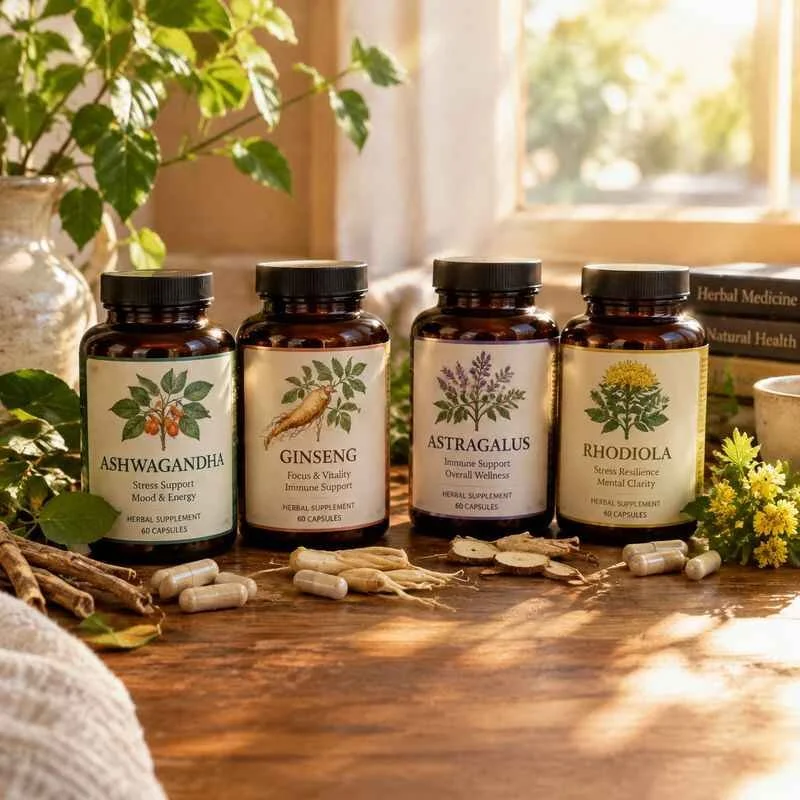
1. Ashwagandha (Withania somnifera)
Ashwagandha is one of the best-known adaptogenic herbs in Ayurvedic medicine. Researchers have investigated its potential effects on stress, anxiety, sleep and fatigue.
One particularly interesting study looked specifically at women undergoing chemotherapy for breast cancer. Researchers followed 100 women, the majority with Stage II or III breast cancer, who received either chemotherapy alone or chemotherapy alongside ashwagandha root extract. The women taking ashwagandha received 2 g every eight hours throughout their chemotherapy treatment.
The researchers found significantly lower fatigue scores in the group taking ashwagandha, together with improvements in several quality-of-life measures. Also, the 2 year survival rate in the ashwagandha group was 72%, whereas in the control group it was 56%.
However, the study was open-label and non-randomised, meaning it couldn't eliminate the possibility that other differences between the groups influenced the results (5).
A more recent 2025 review examined research into ashwagandha's potential effects on wellbeing, including stress, anxiety, fatigue, sleep and cognitive function.
The review discussed several mechanisms for its effectiveness, including effects on the stress response and inflammatory pathways (6).
What about sleep?
Sleep disturbances can make cancer-related fatigue considerably worse.
Several clinical studies in people without cancer suggest that ashwagandha may improve sleep quality, sleep onset and overall sleep duration (7).
A review of 30 clinical studies in cancer patients showed it was effective for insomnia in them too (8).
Important safety considerations
Ashwagandha isn't suitable for everyone.
It may affect thyroid hormone levels and interact with thyroid medications, so if you have an overactive thyroid or you take thyroid hormones, you should avoid using it (9).
It may also interact with immunosuppressants, sedatives, diabetes medications and certain other medicines (9), so always check with your pharmacist before using it.
There are also isolated reports of liver injury associated with ashwagandha supplements. Although this reaction appears rare, it can be serious. If you have or have had liver problems, avoid using it (10). Liver injury in patients with liver problems are very common with medications such as benzodiazepines, so this should be kept in perspective.
Because ashwagandha may affect hormonal pathways, anyone with a hormone-sensitive cancer should discuss its suitability with their oncologist before considering it.
I would be cautious about using this herb during active cancer treatment without specialist advice. But after treatment and provided that there are no interactions with drugs you may take, it could be a very helpful herb.
As well as its effects on stress, anxiety and sleep, it has a multitude of other useful properties for cancer patients. You can read more about them here.
2. Rhodiola rosea
Rhodiola rosea is a flowering plant that grows in cold, mountainous regions of Europe and Asia. Traditional medicine systems have used it to help combat fatigue and improve physical and mental endurance.
Its principal active compounds include rosavins and salidroside. Laboratory research suggests that these compounds can influence several pathways involved in the body's response to stress.
Rhodiola has also attracted attention for its potential effects on mental fatigue, concentration and cognitive performance.
One randomised, double-blind, placebo-controlled study investigated Rhodiola in people experiencing stress-related fatigue. The researchers found improvements in fatigue symptoms and mental performance among those taking the herb (11).
Another study involving 100 people with prolonged or chronic fatigue reported improvements following eight weeks of supplementation. However, this was an open-label study without a placebo group, so we need to interpret its findings cautiously (12).
Could Rhodiola help with chemo brain?
Cancer patients sometimes experience difficulties with memory, concentration and mental clarity. People commonly refer to these symptoms as chemo brain.
Rhodiola's potential effects on mental fatigue make it an interesting herb to investigate. In a review paper, there are several studies quoted that show it has a neuroprotective effect (13). But as yet, there have been no studies of its effects on chemo brain.
Rhodiola may have stimulating effects, so people who experience anxiety, restlessness or insomnia should exercise caution. Always take it in the morning and, if you feel anxious reduce the dose.
I would advise against its use in people with bipolar disorder because it may cause mania.
Otherwise, it has a good record for safety. But always check with your pharmacist for any interactions with your medications.
3. Astragalus (Astragalus membranaceus)
Astragalus has a long history of use in traditional Chinese medicine. Practitioners have traditionally used its root to support vitality and immune function.
Researchers have investigated its polysaccharides and other active constituents for their potential immunomodulatory and anti-inflammatory effects.
This is particularly interesting in cancer research because chemotherapy can affect immune cell production and function.
A review of 8 studies involving 804 participants in total on Astragalus and its effects on cancer-related fatigue showed that it was effective at reducing fatigue and improving quality of life (14).
Astragalus and immune function
Astragalus polysaccharides have demonstrated immunomodulatory activity in laboratory and clinical research.
Some studies have reported changes in immune cell populations, including T lymphocytes.
However, stimulating immune activity isn't necessarily beneficial for every cancer patient.
People receiving immunotherapy, immunosuppressive medication or treatment following a stem cell or organ transplant need to be careful about considering immune-active herbs. Always talk to your pharmacist and healthcare team before taking them.
4. Ginseng
Panax ginseng
Panax ginseng, often called Asian or Korean ginseng, has a long history of use in traditional East Asian medicine.
Its active compounds, called ginsenosides, have demonstrated anti-inflammatory and antioxidant activities in laboratory studies.
Researchers have also investigated its potential effects on fatigue, physical performance and immune function.
In a systematic review and meta-analysis of 10 randomised controlled trials conducted on the general population, researchers showed that Panax ginseng significantly reduced fatigue severity after 2 to 4 weeks, although effects diminished after 8 to 12 weeks (15).
A different study investigated Korean red ginseng in 438 people receiving chemotherapy for colorectal cancer. Participants received either 2,000 mg of Korean red ginseng daily or a placebo for 16 weeks.
The researchers reported improvements in certain fatigue measures, including mood and walking ability.
The study also found a higher incidence of neutropenia in the ginseng group, an important safety consideration for people receiving chemotherapy (16).
Panax ginseng has also attracted considerable interest for its potential effects on cellular energy production. Its active compounds, called ginsenosides, have demonstrated antioxidant and anti-inflammatory activities in laboratory studies.
This is particularly interesting when we consider the role of mitochondria in cancer. These tiny structures inside our cells do much more than produce energy. They also regulate cellular metabolism, control oxidative stress and help determine whether a cell survives or undergoes programmed cell death.
American ginseng is different
It's worth distinguishing Asian ginseng (Panax ginseng) from American ginseng (Panax quinquefolius).
American ginseng has some strong clinical research among the adaptogens investigated for cancer-related fatigue.
A large randomised, double-blind study involved 364 cancer survivors experiencing fatigue.
Participants received either 2,000 mg of American ginseng daily or a placebo for eight weeks.
At four weeks, the difference between the groups wasn't statistically significant. However, after eight weeks, the American ginseng group experienced a significantly greater improvement in fatigue scores.
The researchers also observed greater benefits among people who were still receiving cancer treatment.
Importantly, the study didn't identify a significant difference in adverse effects between the two groups (17).
What About Siberian Ginseng?
Siberian ginseng (Eleutherococcus senticosus), also known as eleuthero, isn't actually a member of the Panax family. It contains different active constituents, including eleutherosides, and has traditionally been used to support physical endurance and resilience to stress.
The European Medicines Agency has approved its use for treating fatigue and weakness. Clinical studies show that it improves mental and physical performance and reduces fatigue in both athletes and individuals suffering from chronic fatigue (18). But so far there are no studies on its use in cancer.
How Can You Use Adaptogens Safely During Cancer Treatment?
Although some adaptogenic herbs have encouraging research behind them, natural doesn't automatically mean safe. Herbs contain biologically active compounds, and these can interact with prescription medicines.
Some herbs influence the enzymes responsible for metabolising medications. Others can affect immune activity, hormone levels, blood pressure or blood glucose.
Before considering an adaptogen:
Talk to your oncologist. Don't start an herbal supplement without checking that it is compatible with your cancer treatment and other medications.
Consider your cancer type. Some herbs may influence hormone or immune pathways, which could matter for particular cancers and treatment protocols.
Check for interactions. Your healthcare team should assess potential effects on drug metabolism and interactions with prescription medicines.
Choose quality products. In Australia, look for products listed on the Australian Register of Therapeutic Goods (ARTG), with an AUST L or AUST R number. This provides important regulatory assurances on the contents of the product and its manufacture, although it doesn't establish that the product will be effective for cancer-related fatigue. In the United States, the FDA does not provide any protection for herbs, as they are classified as foods. In Europe, the European Medicines Agency usually treats them as foods too, although some are registered as medicines through national agencies. The safest way to get good quality herbs is through a natural health practitioner. They have access to products that have standardised doses of the active constituents.
Monitor for adverse effects. Report any new symptoms to your healthcare provider, particularly digestive problems, unusual fatigue, changes in liver function or allergic reactions.
Avoid combining several adaptogens at once. If you experience an adverse reaction, it becomes much harder to identify which herb caused it.
What Does the Research Still Need to Establish?
Although adaptogens have attracted considerable scientific interest, we still have some significant gaps in our understanding.
Many studies involve small groups of participants, short treatment periods or herbal combinations rather than individual herbs.
We also need more research specifically involving cancer patients.
A herb that reduces fatigue in someone experiencing workplace stress may not have the same effect in someone whose fatigue results from chemotherapy, inflammation, anaemia or disrupted cellular energy production.
Frequently Asked Questions
Can adaptogenic herbs cure cancer-related fatigue?
No. Adaptogenic herbs aren't cures for cancer-related fatigue.
Some, particularly American ginseng and ashwagandha, have shown encouraging results in clinical studies involving cancer patients.
Are adaptogens safe during chemotherapy?
Not necessarily. Safety depends on the individual herb, its preparation, the chemotherapy drugs being used and the patient's medical history.
Some herbs can influence drug metabolism or immune activity, potentially affecting treatment.
Always discuss herbal supplements with your oncology team before taking them.
How long do adaptogens take to work?
There isn't a universal answer.
Some studies have reported improvements within a few weeks, while the American ginseng trial found its most significant results after eight weeks.
The time required may depend on the herb, preparation, dose and individual response.
Which adaptogen has the strongest evidence for cancer-related fatigue?
American ginseng (Panax quinquefolius) has particularly interesting evidence from a large randomised controlled trial involving 364 cancer survivors.
Ashwagandha also has promising research involving women receiving chemotherapy for breast cancer, although the study design was less rigorous.
Korean ginseng has produced some helpful research too.
Can I take adaptogens after cancer treatment finishes?
Possibly, but you still need to consider your medical history, ongoing medications and any long-term effects of treatment.
Fatigue can persist long after cancer treatment ends. It's worth investigating the underlying causes, such as anaemia, before trying an adaptogen. But if there is nothing obvious that can be treated, they are worth trying. I would suggest consulting a natural health practitioner to establish which one is best for you. They can also advise on interactions with medications.
Do adaptogens affect hormone-sensitive cancers?
Some may influence hormone pathways.
Ashwagandha, for example, may affect thyroid hormone levels and testosterone. Anyone with a hormone-sensitive cancer should discuss its suitability with their oncology team before considering supplementation.
Final Thoughts
Cancer-related fatigue can be incredibly frustrating, particularly when it continues long after treatment finishes.
Adaptogenic herbs offer an interesting area of research because some can influence the body's response to stress, while others have demonstrated potential benefits for fatigue and quality of life.
Of the herbs I've discussed, American ginseng has particularly encouraging clinical evidence. Ashwagandha also deserves further investigation, although its safety profile requires careful consideration.
If you found this article useful, sign up for the monthly newsletter on Cancer Prevention. As a thank you for signing up for that, you will receive a short recipe book, 30 Delicious Recipes for Cancer Patients.
If you would also like information on support during cancer treatment, you can sign up for my Cancer Treatment Support newsletter. You will receive a free booklet, Soothing Side Effects: A Natural Support Guide for Cancer Patients, as a thank you gift.
For a more comprehensive collection of evidence-based natural strategies that can support you during cancer treatment and recovery, you need my book, Naturally Supporting Cancer Treatment. It brings together practical information about diet and lifestyle approaches, supplements, and herbs, including their potential benefits, risks and interactions with conventional cancer treatment.
References
National Cancer Institute. Fatigue (PDQ®). Fatigue (PDQ®) - NCI. November 6, 2024. Accessed November 16, 2026. https://www.cancer.gov/about-cancer/treatment/side-effects/fatigue/fatigue-hp-pdq.
National Cancer Institute. Fatigue and cancer - side effects. Fatigue and Cancer - Side Effects - NCI. September 20, 2024. Accessed November 16, 2026. https://www.cancer.gov/about-cancer/treatment/side-effects/fatigue.
Panossian AG, Efferth T, Shikov AN, et al. Evolution of the adaptogenic concept from traditional use to medical systems: Pharmacology of stress‐ and aging‐related diseases. Medicinal Research Reviews. 2020;41(1):630-703. doi:10.1002/med.21743
Panossian A. Understanding adaptogenic activity: Specificity of the pharmacological action of adaptogens and other phytochemicals. Annals of the New York Academy of Sciences. 2017;1401(1):49-64. doi:10.1111/nyas.13399
5. Biswal BM, Sulaiman SA, Ismail HC, Zakaria H, Musa KI. Effect of withania somnifera (Ashwagandha) on the development of chemotherapy-induced fatigue and quality of life in breast cancer patients. Integrative Cancer Therapies. 2013;12(4):312-322. doi:10.1177/1534735412464551
6. Wiciński M, Fajkiel-Madajczyk A, Sławatycki J, et al. Ashwagandha (Withania Somnifera) and its effects on well-being—a review. Nutrients. 2025;17(13):2143. doi:10.3390/nu17132143
Langade D, Kanchi S, Salve J, Debnath K, Ambegaokar D. Efficacy and safety of Ashwagandha (withania somnifera) root extract in insomnia and anxiety: A double-blind, randomized, placebo-controlled study. Cureus. 2019;11(9):e5797. doi:10.7759/cureus.5797
Tandon N, Yadav SS. Safety and clinical effectiveness of Withania Somnifera (Linn.) dunal root in human ailments. Journal of Ethnopharmacology. 2020;255:112768. doi:10.1016/j.jep.2020.112768
National Center for Complementary and Integrative Health. Ashwagandha: Usefulness and safety. National Center for Complementary and Integrative Health. March 2023. Accessed November 16, 2026. https://www.nccih.nih.gov/health/ashwagandha.
Therapeutic Goods Administration (TGA). Withania somnifera (Ashwagandha) and very rare risk of liver injury. Therapeutic Goods Administration (TGA). July 7, 2026. Accessed November 16, 2026. https://www.tga.gov.au/news/safety-updates/withania-somnifera-ashwagandha-and-very-rare-risk-liver-injury.
Olsson EMG, von Schéele B, Panossian AG. A randomised, double-blind, placebo-controlled, parallel-group study of the standardised extract SHR-5 of the roots of rhodiola rosea in the treatment of subjects with stress-related fatigue. Planta Medica. 2009;75(2):105-112. doi:10.1055/s-0028-1088346
Lekomtseva Y, Zhukova I, Wacker A. Rhodiola rosea in subjects with prolonged or chronic fatigue symptoms: Results of an open-label clinical trial. Complementary Medicine Research. 2017;24(1):46-52. doi:10.1159/000457918
Bernatoniene, J., Jakstas, V. and Kopustinskiene, D.M. (2023) Phenolic compounds of Rhodiola rosea L. as the potential alternative therapy in the treatment of chronic diseases. International Journal of Molecular Sciences. 2023;24(15), p. 12293. doi:10.3390/ijms241512293.
Sheng X, Yang L, Huang B, et al. Efficacy of Astragalus membranaceus (Huang Qi) for cancer-related fatigue: A systematic review and meta-analysis of randomized controlled studies. Integrative Cancer Therapies. 2025;24. doi:10.1177/15347354241313344
Yazdan nasab N, Hormati Oughoulbaig AH, Asadi A, Parandak SZ. The Effect of Ginseng and Ginseng-Containing Supplements on Fatigue: A Systematic Review and Meta-Analysis. International Journal of Nutrition Sciences. 2026;11(3):417-426. doi: 10.30476/ijns.2026.108887.1577
Kim JW, Han SW, Cho JY, et al. Korean red ginseng for cancer-related fatigue in colorectal cancer patients with chemotherapy: A randomised phase III trial. European Journal of Cancer. 2020;130:51-62. doi:10.1016/j.ejca.2020.02.018
Barton DL, Liu H, Dakhil SR, et al. Wisconsin ginseng (Panax quinquefolius) to improve cancer-related fatigue: A randomized, double-blind trial, N07C2. JNCI Journal of the National Cancer Institute. 2013;105(16):1230-1238. doi:10.1093/jnci/djt181
Such S, Puchalski C, Kogut Ł, Zaguła G. System-level, molecular and cellular mechanisms of Selected Plant adaptogens—a review. Nutrients. 2026;18(6):931. doi:10.3390/nu18060931