Are water filters necessary?
Benchtop water filter
Those of us who live in developed countries turn on our taps and assume that the water we get is safe to drink and use for washing ourselves. After all, the water company treated it, and it usually looks clear enough. But I'll let you judge whether you're comfortable drinking it and showering/bathing in it without filtering once you've read this article.
Water in most countries is treated with chlorine to kill bacteria, which it does really well. This process has dramatically reduced the incidence of waterborne diseases like cholera, typhoid and dysentery. We forget these diseases were rife in developed countries until the early 1900s, when governments introduced water chlorination (1).
Why chlorinated water can cause health issues
The downside of chlorine in the water is that it reacts with organic and non-organic matter in the water to produce disinfection by-products (DBPs). In epidemiological studies DBPs have been associated with reproductive problems and an increased risk of cancer development, particularly of the bladder and rectum (2).
Besides DBPs, because chlorine kills bacteria, it has a significant effect on the human microbiome, both in the gut and on the skin. Our gut microbiome is crucial for good health. When the balance of our microbiome is disturbed, we may suffer digestive problems like ulcerative colitis and Crohn's disease, which can lead to bowel cancer. You can also develop allergies, put on weight, develop mental problems, and it can affect your immune system, which is part of our defence against cancer (3). Unfortunately, we absorb chlorine through the skin, so you don't have to drink it to have these problems.
As well as chlorine, we find other hormone disrupting compounds in water. One group is perfluoroalkyl substances (PFAS). They're used in a wide variety of applications, including non-stick pans, polishes, paints, waxes, cleaning products, waterproofing and stain proofing products, and firefighting foams. Because of this, they can easily reach our drinking water supplies. All of them have the potential to cause reproductive problems, and they build up in the body (2).
Another compound often found in water is bisphenol A (BPA), which is also a hormone disruptor. It's widely used in producing epoxy resins and polycarbonates. Manufacturers use epoxy resins for lacquering metal products like water supply pipes, bottle tops and food cans. They use polycarbonates for producing food and drink containers, including bottled water. We absorb them in our diet, but water supplies also contain them. This is a major concern, as they are associated with reproductive issues and with breast cancer (2).
Another group of chemicals found in water supplies is phthalates. They're also used widely in everything from cosmetics and skin care products to plastics used for food storage, children's toys, medical equipment, and construction equipment and clothing. Because they are also hormone disruptors, they can cause a variety of reproductive problems (2).
Another issue is organic pesticides. They're widely used in agriculture, of course, and there is significant runoff, resulting in high levels in groundwater. But some are used in water disinfection too. These also have significant effects on reproductive health (2).
Oestrogens are another source of concern. Amazingly enough, although many people believe the contraceptive pill is to blame, it contributes less than 1% of the oestrogens in drinking water (4). In some countries, like the US, the government permits farmers to use hormones to help with cattle growth, which leak into the environment from the cattle's waste (2). Pregnant women's urine contains high levels of hormones, which get into the drinking water supply. Exposure to these oestrogens has been associated with an increased risk of breast cancer (2).
You will also find heavy metals in drinking water. These include cadmium, arsenic, copper and lead. The first 3 are all connected with an increased risk of cancer. Lead is associated with reproductive, heart and kidney problems in adults. Lead poisoning affects children more severely than adults, resulting in reduced IQ, nervous system dysfunction, hyperactivity and learning disabilities (5).
The best ways to remove chlorine from drinking water
So, although our water may be free from pathogenic bacteria, it's far from being harmless. That's where water filters can make a difference. There is a wide variety of filters to suit every budget. These range from whole house systems, where water is filtered before reaching the home water supply, to portable systems, which sit on a bench.
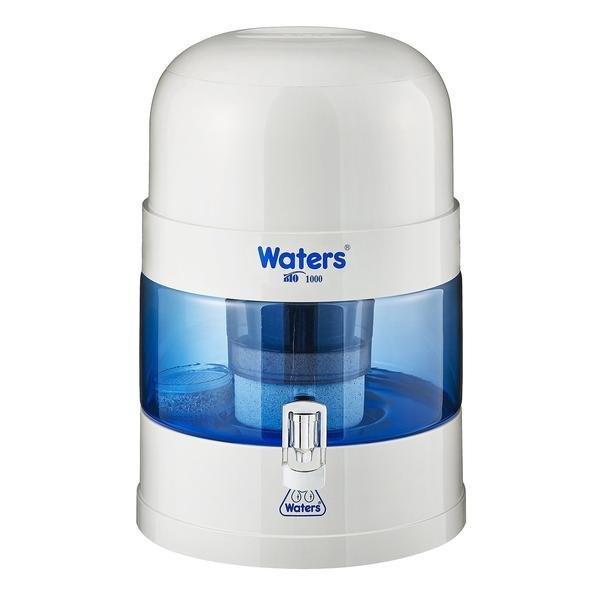
My personal favourite comes from a company called WatersCo. Their filtration system has multiple levels, so it removes all chemicals, chlorine, heavy metals and bacteria. It also re-mineralises the water, so you don't miss out on the benefits of important minerals, like calcium and magnesium. It produces slightly alkaline, magnetised and ionised water which tastes wonderful.
I have their large system that sits on the bench top, so it's portable, which is perfect if you're renting. Its footprint isn't too big. The water reservoir is glass, so your filtered water doesn't sit in plastic. When you buy the unit, it comes complete with all the filters you need for the next 4 years, unlike many of its competitors. They also offer jugs that fit in the fridge if a smaller system suits you better, or an under sink filter if you prefer. To help with your budget, they also allow you to pay in instalments.
They operate in Australia, the US, UK and New Zealand. You can reach them at https://waterscoaustralia.com.au/?rfsn=6115339.7c4dd5. This is an affiliate link, so I get paid a small commission if you buy from it. That helps me keep my website running.
I hope you enjoy your better-tasting, safer water!
Of course, there are many other ways to help keep you healthy. If you'd like to receive a monthly article on cancer prevention in your Inbox, you can subscribe to my newsletter by clicking here. As a thank you, I'll send you a FREE collection of 30 delicious recipes for cancer patients.
If you're also interested in supporting cancer treatment, click here to receive monthly articles to help you safely navigate cancer treatment and its side effects using evidence-based natural therapies alongside your medical treatment. You'll receive Soothing Side Effects: A natural support guide for cancer patients as a thank you GIFT.
Would you prefer comprehensive advice to help you survive the cancer journey and get back to health, from preventing it from ever starting or recurring to support through treatment? Then you need a copy of my book, Naturally Supporting Cancer Treatment. It's crammed with research-based ways to help you, in 385 pages of practical advice. To find out more, click the button below.
References
Bright Hub Engineering. The History of Water Chlorination - A Major Public Health Advance. Brighthubengineering.com. https://www.brighthubengineering.com/structural-engineering/77511-water-chlorination-history-the-mid-1800s-through-the-early-1900s/. Published 2013. Accessed June 14, 2022.
Gonsioroski A, Mourikes V, Flaws J. Endocrine Disruptors in Water and Their Effects on the Reproductive System. Int J Mol Sci. 2020;21(6):1929. doi:10.3390/ijms21061929
Graves J. Naturally Supporting Cancer Treatment: Evidence-Based Ways To Help Prevent Cancer Formation And Recurrence, And Assist Treatment. Canberra: Kamberry Press; 2021:244-246.
Science Daily. Don't blame the pill for estrogen in drinking water. Science Daily. https://www.sciencedaily.com/releases/2010/12/101208125813.htm. Published 2011. Accessed June 14, 2022.
Winfield S. Common Heavy Metals in Water & How to Remove Them. Water Defense. https://waterdefense.org/water/contaminants/heavy-metals/. Published 2022. Accessed June 14, 2022.