
Can Acupressure Improve Sleep in Cancer Patients? Evidence-Based Answers

Sleep can be a genuine problem for about 57.4% of cancer patients, which is about 2 or 3 times higher than in the general population.
It isn’t surprising given that anxiety levels are high, and that leads to poor sleep quality; some cancer treatments can also cause insomnia; any pain from the tumour can keep people awake too.
Pharmacological medications may help, but many come with their own side effects, including drowsiness, cognitive impairment, and the potential for addiction and ongoing drug abuse. So natural remedies can be very helpful, and you will find some on this blog here, here, and here.
Acupressure is an effective way to improve sleep too, both in cancer patients and the wider population. It has the added advantage of not interacting with any drugs you may be taking (1)
What is acupressure?
Acupressure is like acupuncture, but without needles. Instead, you use pressure from your fingers, knuckles or a blunt instrument. It uses the same meridians as acupuncture. Meridians are channels along which acupuncture and acupressure practitioners believe that qi, or energy, flows. The theory is that when the flow of qi is blocked or interrupted, symptoms appear in the body. Acupuncture and acupressure are used to unblock the qi.
Acupressure is a little safer than acupuncture because it doesn’t use needles, which might cause infections and pain in the hands of an inexperienced acupuncturist. It has the added advantage that you can self-administer it, and you can do it anywhere, including from your bed.
Practitioners use both acupressure and acupuncture to clear various symptoms, but in this article, we will focus on their effects on sleep.
How effective is acupressure?
A recent systematic review and meta-analysis looked at the results of 11 studies that examined the effects of acupressure on the body. (It also covered other studies that examined the effects on the ears, which are not relevant to this article.) It found a significant effect on sleep quality across breast, lung and ovarian cancer patients (2).
Researchers found improvements regardless of the type of treatment that the participants had received, and it didn’t matter whether they were undergoing treatment or post-treatme
The studies mostly involved patients performing the acupressure themselves, but there was no difference between them and the studies where a nurse or practitioner performed it.
Four of the studies reported side effects, but these were mild: mild bruising or mild local ulcers at the sites of the acupressure, mild pain and nausea, finger fatigue and acupoint allergies.
Most of the studies used a combination of different acupressure sites for sleep:
Hegu (aka Joining Valley, Large Intestine 4, LI4)
Sanyinjiao (aka Three Yin Intersection, Spleen 6, SP6)
Shenmen (aka Spirit Gate, Heart 7, HT7)
Yintang (aka Hall of Impression, Third Eye, EX-HN3)
Performing acupressure
1. You can do this in any position: lying down, sitting or standing up. Whatever is comfortable.
2. Find the pressure point you want to use. The images below should help.
Hegu (LI4)
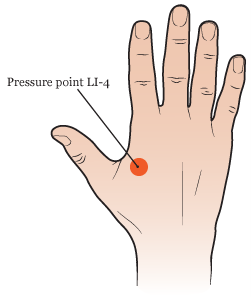
On the back of your hand, in the fleshy area between the thumb and forefinger.
Image credit to: https://www.mskcc.org/cancer-care/patient-education/acupressure-pain-and-headaches
Sanyinjiao (SP6)
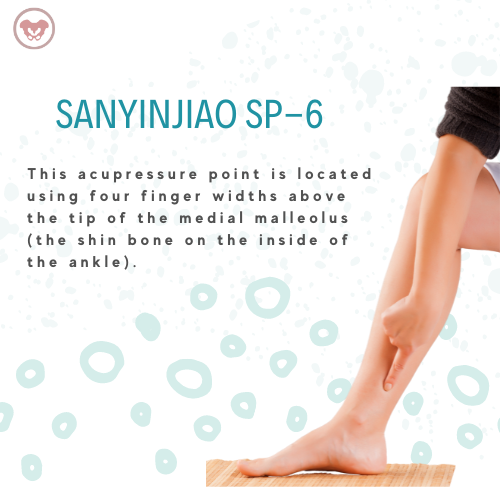
Four finger widths above the top of the inner ankle bone.
Image credit to https://hermanwallace.com/blog/focus-on-sanyinjiao-sp6-acupoint
Shenmen (HT7)
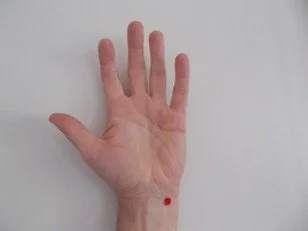
On the inner wrist crease, on the little finger side, feel for a hollow.
Image credit to https://www.acupressure.com.au/wprss/?tag=ht-7
Yintang (EX-HN3)
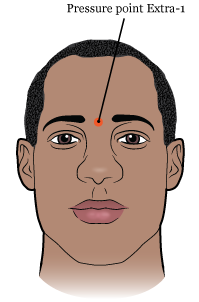
The midpoint between your eyebrows.
Image credit to https://www.mskcc.org/cancer-care/patient-education/acupressure-stress-and-anxiety
3. Press on the point with your finger or thumb, making small circles either clockwise or counter-clockwise, for about 2-3 minutes.
4. It might feel tender or sore, but if it’s painful, ease up on the pressure a bit, as you’re pressing too hard.
You might also find this video helpful for advice on acupressure to help cancer patients with sleep. https://www.you-tube.com/watch?v=FgZR_CVE-Lo
Is acupressure safe for cancer patients?
It is wise to check with your oncologist to learn whether you should avoid particular points.
Areas to avoid are:
Directly over a tumour.
Radiation sites.
Anywhere that feels numb.
Wherever you have a wound, including ports and catheters.
Areas of swelling.
Infection sites.
Where there has been a recent blood clot.
(3, 4)
Do not use acupressure if you are pregnant, or think you might be pregnant.
Stop using it if you feel dizzy, pain or have any other unusual symptoms.
Conclusion
Lack of quality sleep can slow down healing and reduce your immune system’s effectiveness. It can increase your experience of pain and cause your mood to deteriorate. So, it’s well worth investing some time in a method that has evidence for its effectiveness, costs nothing, and is safe.
Acupressure ticks all of those boxes. Give it a try, and you will be in the Land of Nod before you know it.
If you have found this article useful, you can sign up to read more in my monthly newsletter by clicking here. As a thank you, you will receive a free booklet called Soothing Side Effects: A natural support guide for cancer patients.
If you would like help with other issues during your cancer journey, you can find information on how to support your treatment, reduce side effects and help prevent it returning, all using natural therapies in my book, Naturally Supporting Cancer Treatment: Evidence-based ways to help prevent cancer formation and recurrence, and assist treatment. Click on the button below to learn more.
References
Khosravaninezhad Y, Moshfeghinia R, Liaghat L, et al. Effect of acupressure and acupuncture on sleep quality in cancer patients with insomnia: A systematic review and meta-analysis. EXPLORE. 2025;21(4):103192. doi:10.1016/j.explore.2025.103192
Yang C, Huang Y, Ling W, Cheung DS, Lee JJ. The effectiveness of acupressure on sleep quality in cancer patients: A systematic review and meta‐analysis of Randomised Controlled Trials. Journal of Clinical Nursing. 2025;34(11):4560-4577. doi:10.1111/jocn.17707
Rumi S. Acupressure - self-care at home. Roswell Park Comprehensive Cancer Center. July 20, 2023. Accessed January 12, 2026. https://www.roswellpark.org/cancertalk/202307/acupressure-self-care-home.
US Department of Veteran’s Affairs. Acupressure for Sleep. US Department of Veteran’s Affairs. April 2021. Accessed January 12, 2026. https://www.va.gov/files/2021-12/4312_AcupressureforSleep.pdf.