What is the best diet to follow during chemotherapy?
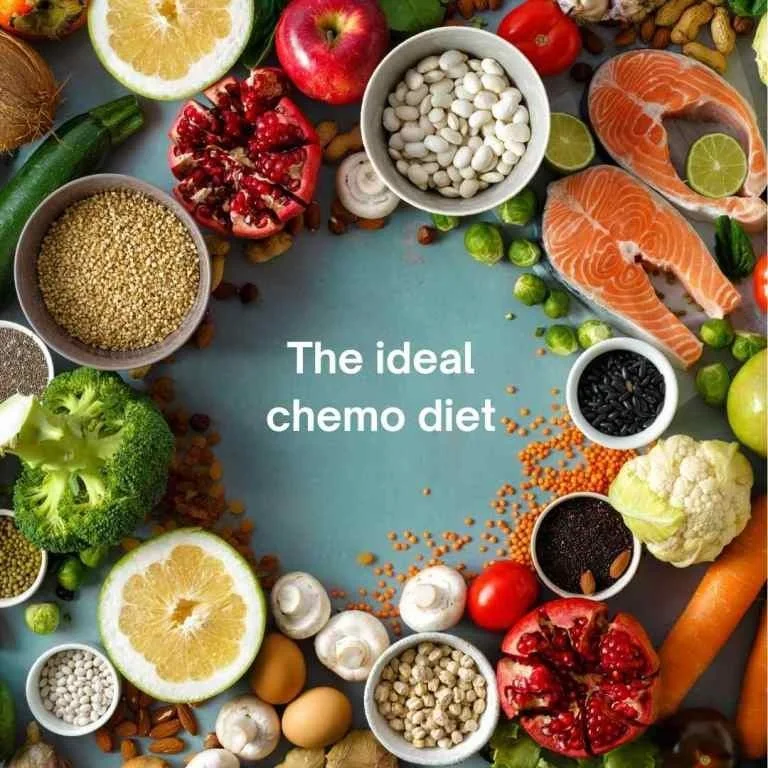
Before you start chemo, it’s natural to want to optimise your chances of weathering it well and helpin improve the chances of it working well. One question that’s often asked is ‘What is the best diet during chemo?’.
The research shows that there are a few options that can help reduce side effects and produce better results from chemo:
A plant-based diet
An anti-inflammatory diet
Fasting/fasting-mimicking
Effects of the Mediterranean diet on chemo
A key part of the Mediterranean diet is the use of extra virgin olive oil. One constituent of olive oil is oleocanthal, which gives a good quality olive oil the peppery flavour that makes your throat tingle when you eat it.
Oleocanthal is strongly anti-inflammatory and, since inflammation is high in cancer patients, that makes it a useful addition to your diet (1). Inflammation promotes angiogenesis, the formation of new blood vessels that tumours use to grow.
Oleocanthal has anti-cancer properties too, so it will support the actions of chemo drugs by inhibiting many types of cancer cells’ growth and metastasis (1).
The results of some studies show it can reduce chemoresistance, improving the results of chemo (1).
The Mediterranean diet also significantly improves fatigue in patients undergoing treatment (2).
How a plant-based diet can support chemo
One of the major chemo drugs for colon cancer is 5-fluorouracil, but chemoresistance, which often renders the treatment useless, limits its use, and so do its significant side effects.
The research around the use of plant-based foods including vegetables, fruit, legumes and tea showed that they worked synergistically with 5-fluorouracil to reduce chemoresistance and side effects (3).
A study using a plant-based high-protein diet on chemo patients found the patients had higher muscle mass and less fatigue than those who followed their usual diet (2).
Can an anti-inflammatory diet support chemo?
Chronic inflammation is one driver of cancer formation, so reducing inflammatory foods will help chemo to do its work without fanning the flames of the tumour.
What does an anti-inflammatory diet look like? It includes:
Increasing your intake of plant-based foods like fruit, vegetables, legumes, nuts, seeds and wholegrains. These should take up at least 2/3 of the space on your plate, with lean protein, either animal or plant-based, occupying the rest.
Limiting ultra-processed foods like crackers, cookies and snack foods, which offer little in the way of nutrients, and are inflammatory.
Limit red meat, such as beef, lamb, pork, deer, and buffalo, to 3 small serves a week or less. Eat skinless chicken and turkey, or fish if you eat animal foods. Or use beans, lentils, and tofu for a plant protein boost.
Increasing omega 3 foods like oily fish (salmon, sardines, tuna, halibut, and anchovies), flaxseeds, walnuts, chia seeds and avocado can reduce inflammation and help to balance the omega 6 foods that are inflammatory. Olive oil and avocado oil are also high in omega 3s. Avoid seed oils like sunflower, peanut, corn and soybean, which are all high in omega 6s, which makes them inflammatory.
Increase your consumption of fermented foods, like yoghurt with live cultures, kefir, sauerkraut, kimchi, kombucha and miso soup.
The research shows that people who eat an anti-inflammatory diet during chemo suffer less fatigue than those who don’t (2). Researchers consider inflammation causes the fatigue (4).
The effects of a keto diet on chemo
A ketogenic (keto) diet focuses on reducing the amount of carbohydrates to very low levels, using moderate amounts of protein and high levels of fat. It forces the body to use fat as its primary source of energy, producing ketones. This affects cancer cells because they primarily, although not only, use glucose, the end product of carbohydrate breakdown, for energy. So, depriving them of the ability to produce energy stops their growth.
Recent studies show that a keto diet can reduce inflammation, prevent cancer growth, protect healthy cells from the effects of treatment, and improve the effectiveness of chemo (5).
Glioblastoma, a virulent form of brain cancer, responds well to a keto diet. The cancer cells depend on glucose for energy and aren’t able to metabolise ketones, whereas healthy brain cells thrive on them. Patients who stick to a keto diet are more likely to have better survival rates than those who eat a normal diet (6).
Doctors are increasingly using immune checkpoint therapy to treat cancers, but some cancers don’t respond well to it. Keto diets increase the likelihood that treatment will be successful (7).
If you choose to use a keto diet, I strongly suggest you do it under the care of a qualified nutritionist. It is very easy to construct a poor keto diet, with lots of saturated fats from fatty meat, a lot of poor quality bacon that is high in phosphate salts, heavy with cream and cheese, and using ultra-processed keto foods. Whilst these will get you into ketosis, they will do little for your overall health. It is important to include low carb vegetables and fruit, as well as good quality fats like avocado, nuts, seeds, olive oil and olives, and to ensure you supplement with the right electrolytes.
How does fasting/fasting-mimicking affect cancer treatment?
Various studies show that fasting or fasting-mimicking diets protect healthy cells from the adverse effects of chemo and make cancerous cells more vulnerable to it. Although it’s important not to maintain these diets for too long, following them around the time of treatment helps to reduce the risk of loss of muscle mass, also known as cachexia.
A study on patients with breast cancer showed that patients tolerated short-term fasting well, and it improved their quality of life and levels of fatigue. They also had less damage to the bone marrow and a quicker recovery post-chemo. Their fast began 24 hours before treatment and ended 24 hours afterwards (8).
Another study of breast cancer and ovarian cancer patients also had no problem tolerating short-term fasting. They too had a better quality of life, less fatigue and tolerated chemo better. Unlike most breast and ovarian cancer patients, they didn’t put on weight with the treatment either. They fasted for 36 hours before and 24 hours after their treatment (9).
Intermittent fasting (IF) restricts eating to a small window each day, usually between 6 and 8 hours. One study of IF was on HER-2 negative breast cancer patients. It restricted their eating for 3 days in each cycle of chemo: on the day before, the day of treatment and the day after. They could eat around 750 calories, mostly vegetables and fruit with a small amount of protein and carbohydrates, from 6 pm to midnight, with only water the rest of the day. The study ran over 4 cycles of treatment, every 3 weeks. The IF group experienced fewer mouth sores, diarrhoea, constipation, vomiting and nausea than the control group (10).
Fasting-mimicking diets (FMD) typically reduce calories in the diet for a short term. One study of this type of diet was a 4 day plant-based, low-protein regime of broths, soups, liquids and tea, 3 days prior to chemo and the day of treatment. On the first day, participants ate about 1200 calories, with about 200 calories each day on the next 3 days. There were no restrictions on when they could eat. The participants received either 6 or 8 cycles of treatment, depending on the protocol. Many patients found it too difficult and gave up. In those who persisted, though, the results of chemo were about 3 times better than the control group, but quality of life wasn’t significantly different, meaning that side effects were the same (11).
Conclusion
As you can see, there is no one diet that is perfect during chemo. A lot depends on your personal circumstances. If you need to prepare your own food, you will want something quick and easy; whereas, if you have someone to help you, it can be something that takes more preparation time.
Some diets are more difficult to stick to as well. But one thing seems to connect these diets: they all include lots of plant-based foods: fruit and vegetables, nuts and seeds, legumes and wholegrains. If you stick to those, you can’t go too far wrong.
There are other gems on food preparation and storage in my book, along with lifestyle changes, and details about herbs and supplements that can support you during your treatment and after. If you want more than just dietary help, check it out by clicking the button below.
References
González-Rodríguez M, Djedjiga AE, Cordero-Barreal A, et al. Oleocanthal, an antioxidant phenolic compound in extra virgin olive oil (EVOO): A comprehensive systematic review of its potential in inflammation and cancer. Antioxidants. 2023;12(12):2112. doi:10.3390/antiox12122112
Abene J, Deng J. Evaluating the role of dietary interventions in reducing chemotherapy toxicities in cancer patients: A systematic review. Journal of Cancer Survivorship. Published online March 22, 2025. doi:10.1007/s11764-025-01777-6
Yang Z, Cespedes-Acuña CL, Yang Z, Abu Bakar MZ, Chan KW, Deng X. Plant Foods and their bioactives as dietary enhancers for colon cancer treatment with 5-Fluorouracil. Food Reviews International. 2025;41(5):1390-1439. doi:10.1080/87559129.2024.2446366
Zhang Y, Cui G, Xiu Y, Zhao M. The effect of nutritional support based on the dietary anti-inflammatory index on cancer-related fatigue in lung cancer patients undergoing chemotherapy. Cancer Nursing. 2022;46(5):394-404. doi:10.1097/ncc.0000000000001124
Neha, Chaudhary R. Ketogenic diet as a treatment and prevention strategy for cancer: A therapeutic alternative. Nutrition. 2024;124:112427. doi:10.1016/j.nut.2024.112427
Valerio J, Borro M, Proietti E, et al. Systematic review and clinical insights: The role of the ketogenic diet in managing glioblastoma in cancer neuroscience. Journal of Personalized Medicine. 2024;14(9):929. doi:10.3390/jpm14090929
Stefan VE, Weber DD, Lang R, Kofler B. Overcoming immunosuppression in cancer: How ketogenic diets boost immune checkpoint blockade. Cancer Immunology, Immunotherapy. 2024;74(23). doi:10.1007/s00262-024-03867-3
de Groot S, Vreeswijk MP, Welters MJ, et al. The effects of short-term fasting on tolerance to (NEO) adjuvant chemotherapy in HER2-negative breast cancer patients: A randomized pilot study. BMC Cancer. 2015;15(652). doi:10.1186/s12885-015-1663-5
Bauersfeld SP, Kessler CS, Wischnewsky M, et al. The effects of short-term fasting on quality of life and tolerance to chemotherapy in patients with breast and ovarian cancer: A randomized cross-over pilot study. BMC Cancer. 2018;18(476). doi:10.1186/s12885-018-4353-2
Omar EM, Omran GA, Mustafa MF, El-Khodary NM. Intermittent fasting during adjuvant chemotherapy may promote differential stress resistance in breast cancer patients. Journal of the Egyptian National Cancer Institute. 2022;34(8). doi:10.1186/s43046-022-00141-4
de Groot S, Lugtenberg RT, Cohen D, et al. Fasting mimicking diet as an adjunct to neoadjuvant chemotherapy for breast cancer in the multicentre randomized phase 2 direct trial. Nature Communications. 2020;11(3083). doi:10.1038/s41467-020-16138-3